
Blog
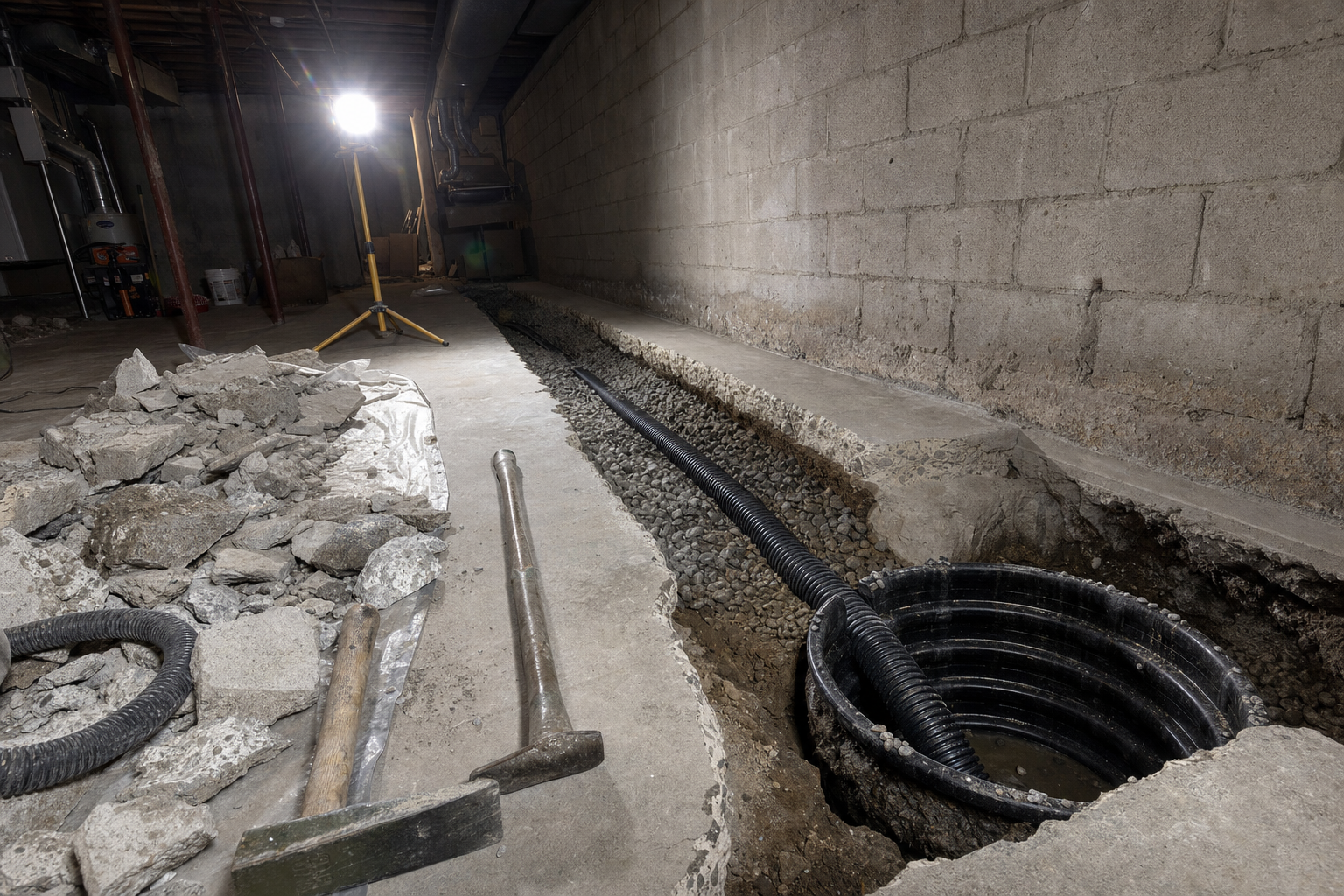
Clay soil near the Ramapo River corridor means real hydrostatic pressure. Interior drain, exterior drain, or both? A decision guide. (845) 668-6691.

Compare concrete pricing in Ramapo, NY. Learn the 4 factors that impact your driveway or patio cost. Call (845) 668-6691 for a transparent, free on-site estimate!
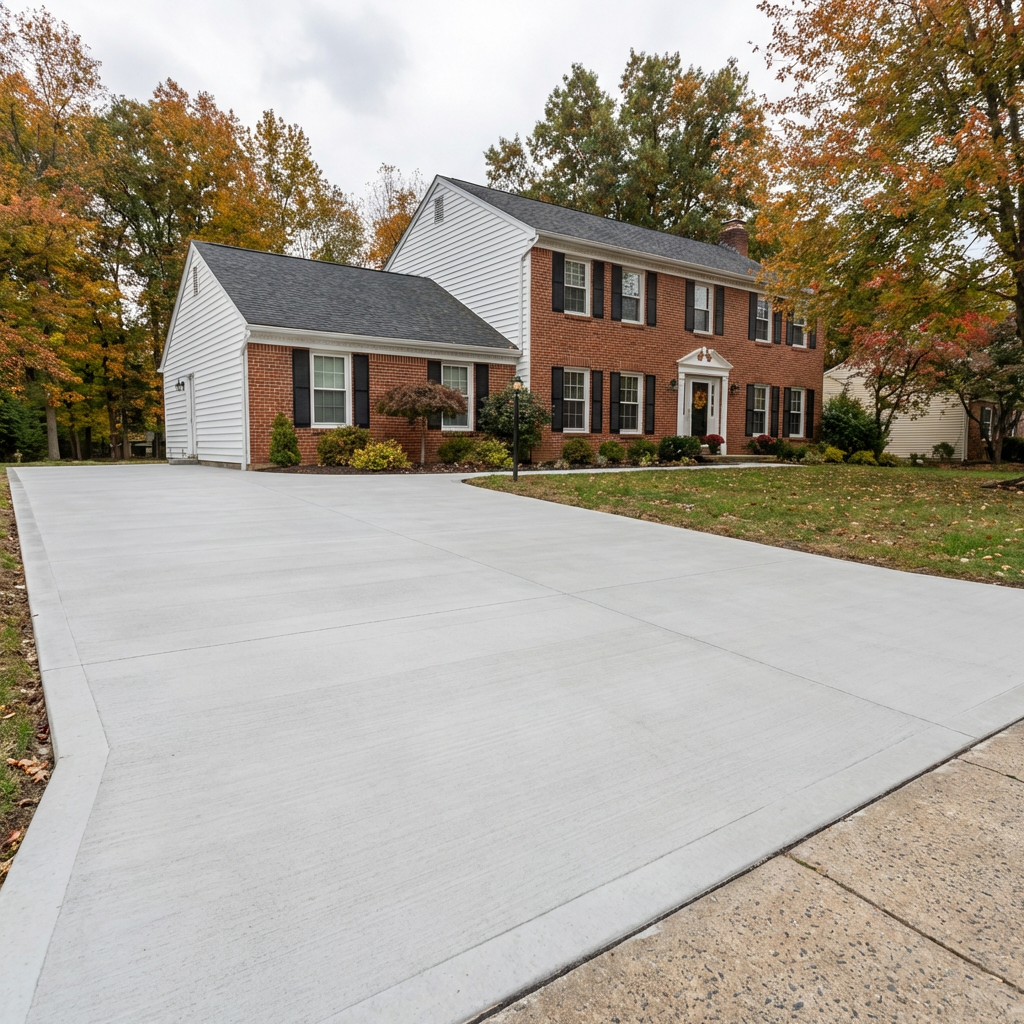
Concrete resurfacing in Rockland County, NY costs $3–$12/sq. ft. Free estimates. Call Ramapo Concrete — serving Suffern, Monsey & Spring Valley.
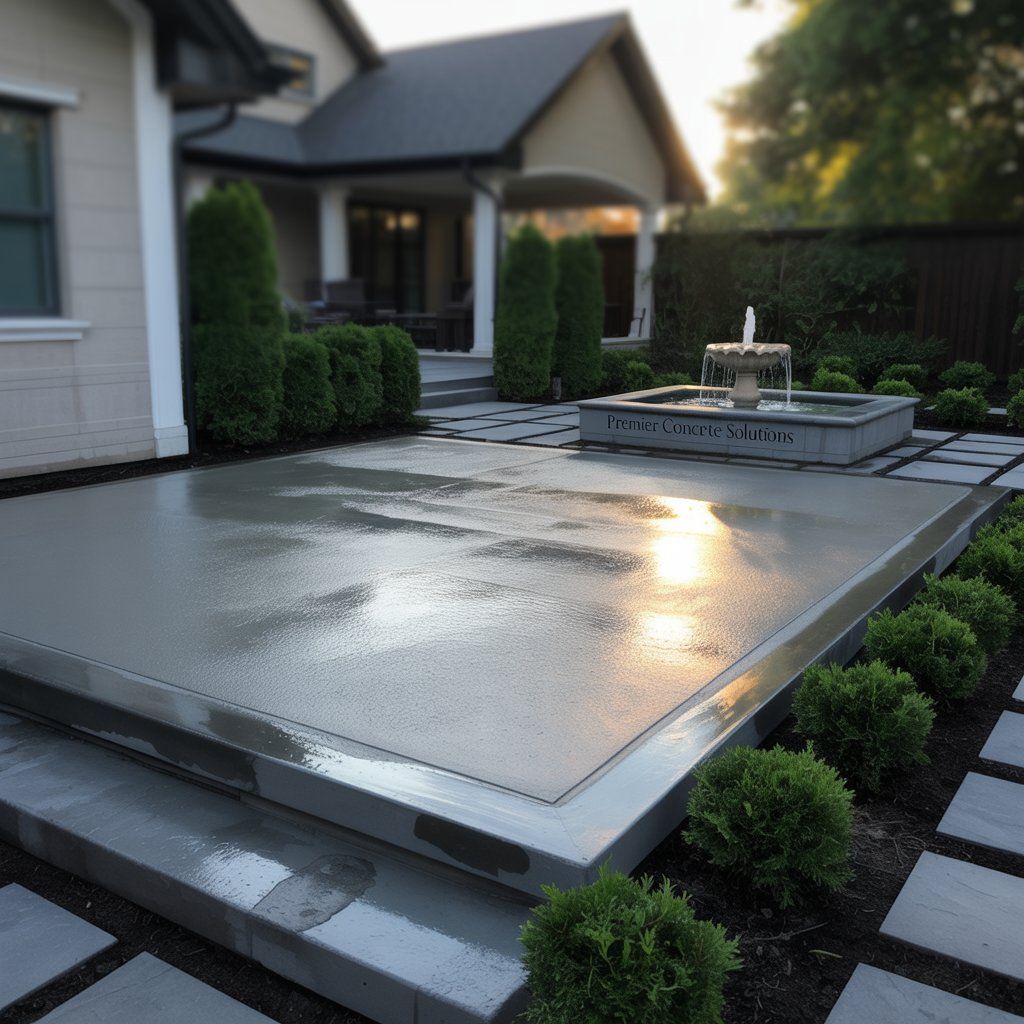
Beautiful stamped concrete patios & driveways built for Hudson Valley winters. Serving all of Rockland County. Call Ramapo Concrete for a free estimate.
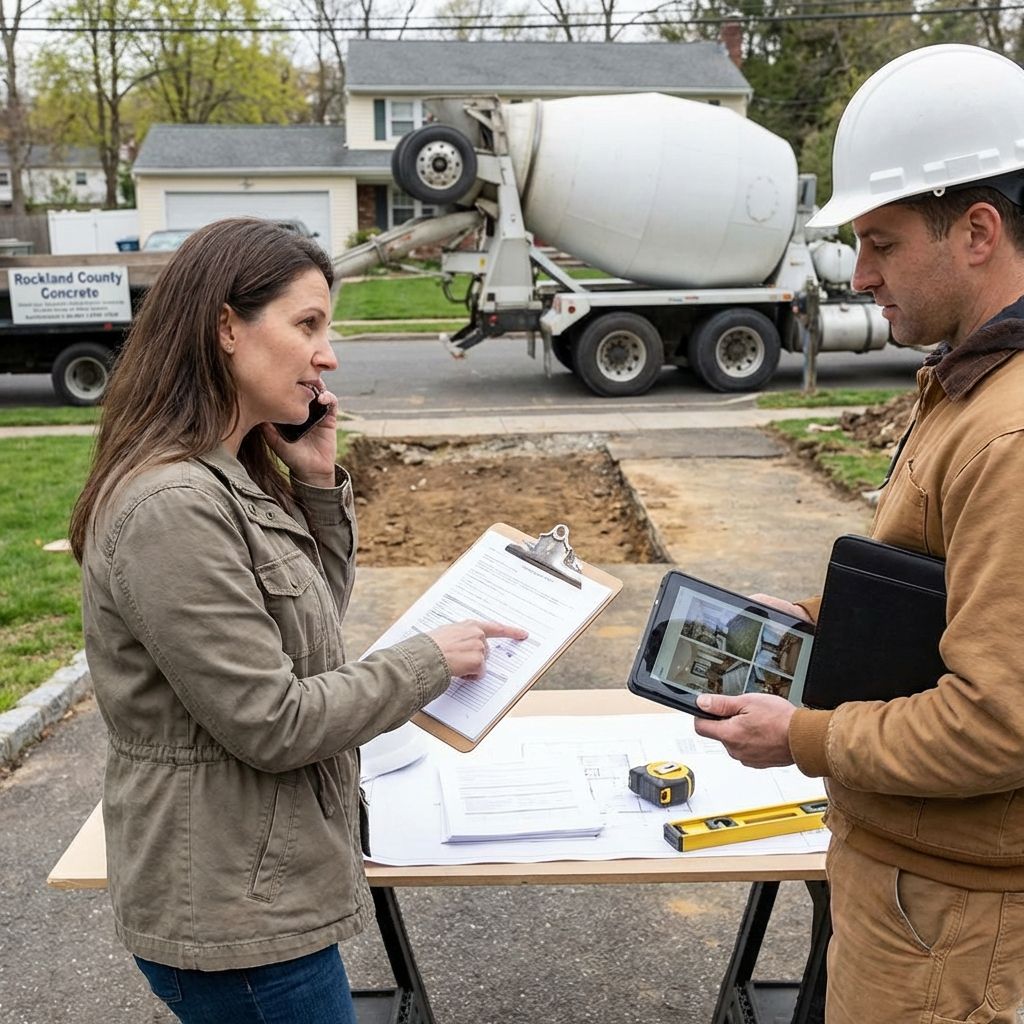
Ramapo is one of the most active home improvement markets in New York State. With over 148,000 residents spread across Suffern, Spring Valley, Monsey, Airmont, Pomona, Wesley Hills, Chestnut Ridge, and a dozen other communities, and with a housing stock that ranges from post-war ranches in Spring Valley to newer construction in Wesley Hills and established estates in Chestnut Ridge, there is constant demand for concrete work — driveways, patios, foundations, steps, pool decks. That demand is served by a contractor market of very uneven quality. The Rockland County home improvement contractor space has well-documented problems: unlicensed crews operating under misleading names, contractors who are skilled salespeople and poor executors, and the perennial issue of work that looks acceptable on day one but reveals its deficiencies after the first winter. Concrete is particularly unforgiving in this regard — by the time you see spalling, cracking, or settling, the contractor who poured it may be unreachable and the remediation cost is entirely yours. This guide gives you a precise framework for evaluating any concrete contractor serving Ramapo before you commit. 1. Rockland County and Ramapo Registration: The Baseline You Must Verify New York State does not maintain a single statewide license for concrete contractors the way a plumber or electrician must be licensed. However, Ramapo-area homeowners have two layers of registration protection they can and should use: Rockland County Home Improvement Contractor Registration. Any contractor performing home improvement work valued at $500 or more in Rockland County must be registered with the Rockland County Department of Consumer Protection. Registration requires proof of insurance, a background check, and agreement to county consumer protection standards. You can verify any contractor's registration status by calling the department directly or checking their online registry. This registration matters for a practical reason: it's your primary recourse if a contractor takes your deposit and disappears, or completes work that fails and refuses to make it right. Registered contractors have surety bonds and a formal complaint process. Unregistered contractors do not — and your only option becomes small claims court. Town of Ramapo Building Permits. Any concrete project that involves structural work — foundations, retaining walls, slabs attached to a structure — or that meets certain size thresholds for driveways and patios requires a building permit through the Town of Ramapo Building Department. The permit process includes inspections that verify the work was done to code. A critical distinction: the Town of Ramapo building jurisdiction covers the unincorporated portions of Ramapo. If your property is within one of Ramapo's incorporated villages — Suffern, Sloatsburg, or Hillburn — permitting goes through that village's building department, not the town. Make sure the contractor you hire knows which jurisdiction applies to your specific address before any work begins. Ask every contractor: "Are you registered with Rockland County as a home improvement contractor? What's your registration number?" "Will you handle the permit application for this project, and do you know which building department covers my address?" Any hesitation or vagueness on either question is a disqualifying red flag. 2. Insurance: Two Certificates, No Exceptions Concrete work involves heavy equipment, excavation, and crews working around your property and adjacent properties. Two insurance documents are non-negotiable: General liability insurance — minimum $1 million per occurrence. This covers property damage during the project: a truck that clips your neighbor's fence, equipment that cracks a utility line, or a finished slab that floods an adjacent property because drainage wasn't handled correctly. Ask for the certificate of insurance with your name listed as additionally insured for the project duration. Workers' compensation insurance — required for any contractor with employees in New York State. Without it, you can be held liable for medical costs if a worker is injured at your property. The Rockland County contractor registration process requires proof of workers' comp, which is one more reason registration verification matters. Do not accept verbal assurances of insurance. Request both certificates in writing before you sign anything. A professional operation emails them the same day you ask. A contractor who delays, makes excuses, or provides documents that look questionable is telling you something important about how they operate. 3. The Ramapo Housing Stock Reality: Why Mix Specification Matters Here Ramapo's communities span a significant range of property types and ages. Spring Valley and parts of Suffern contain dense housing built in the 1950s through 1970s on lots with challenging drainage and older infrastructure. Monsey, Wesley Hills, and Chestnut Ridge have seen substantial new construction alongside older properties. Pomona and Airmont include homes on larger lots with more varied soil conditions. What unites all of these areas is the New York winter climate: roughly 95–100 freeze-thaw cycles annually, combined with road salt runoff from Rockland County's heavily trafficked corridors — Routes 59, 202, and the New York State Thruway interchange areas — that accelerates concrete deterioration when the mix and finishing aren't right. What to specify for any concrete project in Ramapo: Minimum 4,000 PSI compressive strength for driveways and exterior flatwork. This is the minimum specification for cold-climate exterior concrete. Contractors who default to 3,500 PSI or lower are compromising durability. Air entrainment of 5–7% — this is what makes or breaks longevity in freeze-thaw climates. Air-entrained concrete contains microscopic voids that accommodate the expansion of freezing water, preventing the internal fracturing that causes spalling. Non-air-entrained concrete in Rockland County will fail prematurely. Water-cement ratio at or below 0.45 — denser mix, less permeable surface, longer service life. Proper sealing after curing — a penetrating silane/siloxane sealer applied after full cure significantly extends service life, especially on driveways near roadways where salt exposure is highest. When a contractor gives you a quote, ask: "What PSI mix are you ordering from the batch plant, and will it be air-entrained?" Write the answer down. If you get a vague response or they don't know what air entrainment means, move to the next contractor on your list. 4. Subbase Preparation in Ramapo: The Factor That Separates Professional Work from Failure The difference between concrete that lasts 25–30 years and concrete that cracks and heaves within a decade is almost entirely in what happens before the truck arrives. Why Ramapo soil conditions require extra attention: The Ramapo Valley sits in a glacially sculpted landscape with significant soil variability. Much of the lower terrain — particularly in Spring Valley and the areas around the Ramapo River corridor — has clay-rich soils that expand and contract with moisture. Clay soils are the primary enemy of long-lived concrete flatwork: they swell when wet and shrink when dry, creating cyclical movement under slabs that leads to cracking and uneven settling. Upland areas in Pomona, Chestnut Ridge, and Wesley Hills have better-draining soils but often more significant topographic variation that creates drainage challenges requiring grading before concrete work begins. What proper subbase preparation looks like: Excavation to 8–10 inches below finished grade for a standard residential driveway (4 inches of concrete on top of 4–6 inches of compacted gravel base) Compacted crushed stone base — properly graded and compacted, not just loose gravel dumped in a trench Drainage assessment and grading to direct surface water away from the slab Rebar (#4 bar on 18" centers, or heavier) for driveways that will carry vehicle loads Control joints cut or tooled at appropriate intervals (every 10–12 feet for a standard driveway) to direct cracking to controlled locations Ask every contractor to walk you through their subbase process specifically. Ask: "How deep are you excavating, what size gravel base are you using, and will you be installing rebar?" A contractor who describes these specifics fluently has done this work correctly before. A contractor who gives you vague answers or treats these questions as unnecessary is someone whose work you'll be repairing in three years. 5. Ramapo Permit Complexity: Villages vs. Town Jurisdiction This deserves its own section because it's a source of genuine confusion and real legal exposure for Ramapo homeowners. The Town of Ramapo is unusually complex jurisdictionally. It contains three incorporated villages — Suffern, Sloatsburg, and Hillburn — that have their own building departments and permitting processes separate from the town. It also contains numerous unincorporated hamlets and communities (Monsey, Spring Valley, Airmont, Pomona, Wesley Hills, Chestnut Ridge, New Hempstead, and others) that fall under the Town of Ramapo Building Department.A contractor who doesn't clarify which jurisdiction applies to your address before starting work may pull permits from the wrong entity — or skip permits entirely, claiming they're not required, when they are. Why unpermitted concrete work is a serious problem in Ramapo:Rockland County's real estate market is active, with significant transaction volume. Buyers in the current market are thorough, and their attorneys routinely request certificate of occupancy documentation for any work that appears to have been done on the property. Unpermitted driveways, foundations, or structural slabs create transaction complications ranging from required retroactive permitting (expensive and time-consuming) to deal-killers if the work is found to be non-compliant.If you're a homeowner in Suffern, make sure your contractor is pulling permits from the Village of Suffern building department, not the Town of Ramapo. If you're in Monsey or Wesley Hills, it's the Town of Ramapo. If you're not certain, your deed or a quick call to the county will clarify. 6. Getting Quotes That Are Actually Comparable Ramapo homeowners often get quotes ranging from $6 per square foot to $12 per square foot for nominally the same project — a 1,200 square foot concrete driveway. That's a $7,200 price difference on a single project. Understanding why quotes vary this much lets you evaluate them intelligently rather than simply picking the middle number. Legitimate reasons quotes vary: Concrete specification — a 4,000 PSI air-entrained mix costs more than 3,500 PSI non-air-entrained. The cheaper quote is often using cheaper concrete. Subbase depth and material — 4 inches of compacted gravel costs less than 6. You won't see the difference until winter. Reinforcement — rebar adds cost; wire mesh is cheaper but less effective; some contractors skip both entirely on residential driveways. Demolition and disposal — removing and hauling an existing driveway is real cost. Quotes that omit this are not comparable to quotes that include it. Crew experience and supervision — experienced finishers who know how to work concrete in New York weather cost more per hour. Red flags specific to the Ramapo market: The Hudson Valley and Rockland County see seasonal contractor patterns where crews working their way through the spring/summer schedule offer very low prices to fill their calendar. A price that's 40–50% below the median quote should prompt serious questions about what's being skipped. Get a minimum of three written, itemized quotes. Itemized means: square footage, concrete thickness, PSI specification, air entrainment yes/no, base depth and material, reinforcement type, demo/disposal included or excluded, sealing included or excluded, timeline, warranty. If a contractor won't provide an itemized quote, that tells you something about how they plan to manage the project. 7. Ramapo-Specific References: Ask Where, Not Just Whether The final verification is local. Ask every contractor for references from recent projects specifically in Ramapo — and specify the community if possible. A contractor with strong references from Spring Valley projects may have a different track record in Chestnut Ridge, where soil conditions, HOA considerations, and drainage patterns differ. A contractor who can point you to completed projects in your specific part of Ramapo — that you can drive by and evaluate visually — is demonstrating genuine local presence. Beyond formal references: Nextdoor is exceptionally useful in Rockland County's dense communities. Search the contractor's name in your Nextdoor neighborhood feed. Ramapo's communities — especially the denser areas of Spring Valley, Monsey, and Airmont — have high Nextdoor engagement, and recommendations (and complaints) about local contractors circulate there in ways that don't always make it to Google or Yelp. A contractor with multiple positive Nextdoor mentions in your neighborhood is meaningfully different from one with no local presence at all. Ramapo Concrete Contractor Inc. serves all of Ramapo, NY and Rockland County — including Suffern, Spring Valley, Monsey, Airmont, Pomona, Wesley Hills, Chestnut Ridge, and surrounding communities. We handle driveways, patios, foundations, slabs, pool decks, stamped concrete, steps, and sidewalks. All work is permitted through the correct jurisdiction for your address, properly specified for Rockland County's freeze-thaw climate, and backed by our commitment to craftsmanship that lasts. Call (845) 668-6691 for a free estimate. We provide written, itemized quotes — no vague numbers, no surprises. Ramapo Concrete Contractor Inc., 400 Rella Boulevard, Montebello, NY 10901.
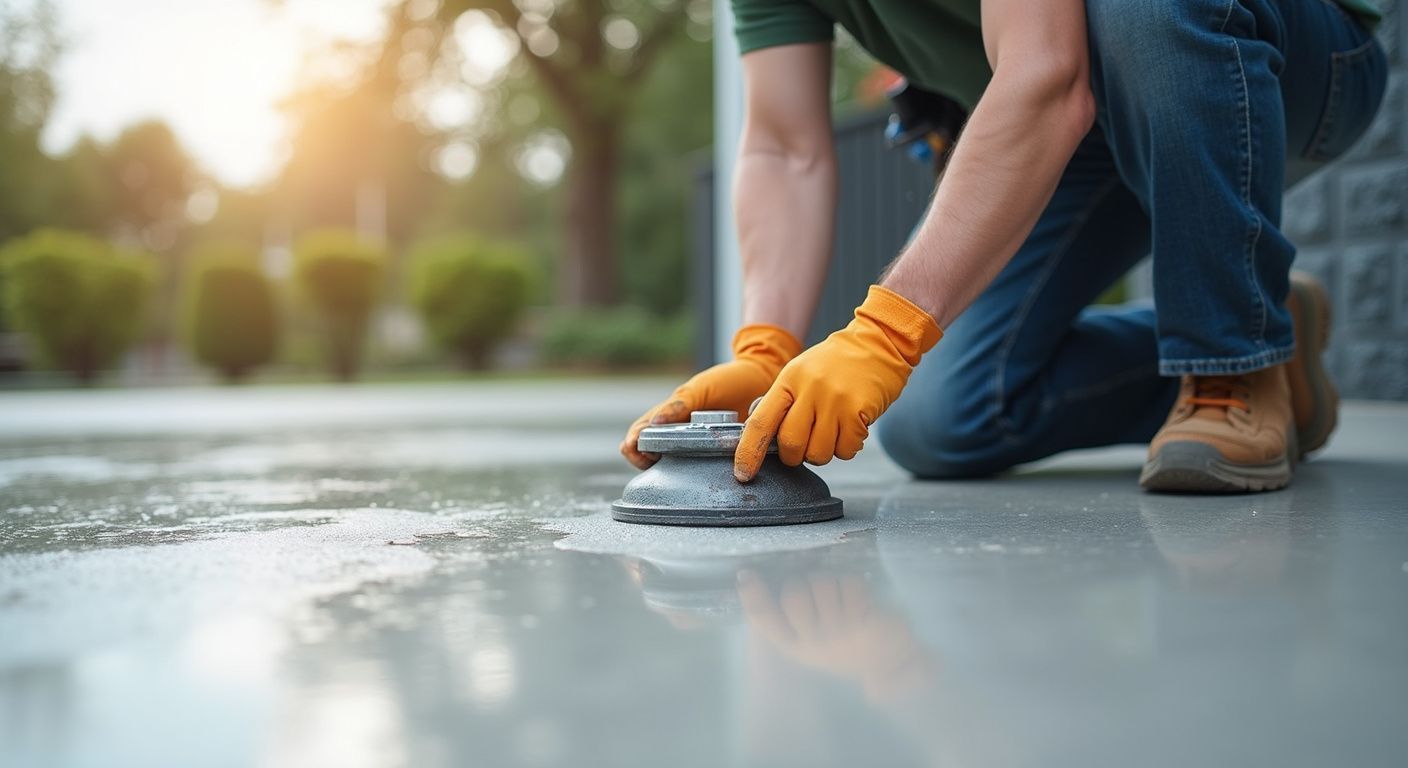
Comparing stamped concrete and pavers for Rockland County patios and driveways. Discover which is more durable, affordable, and easier to maintain.
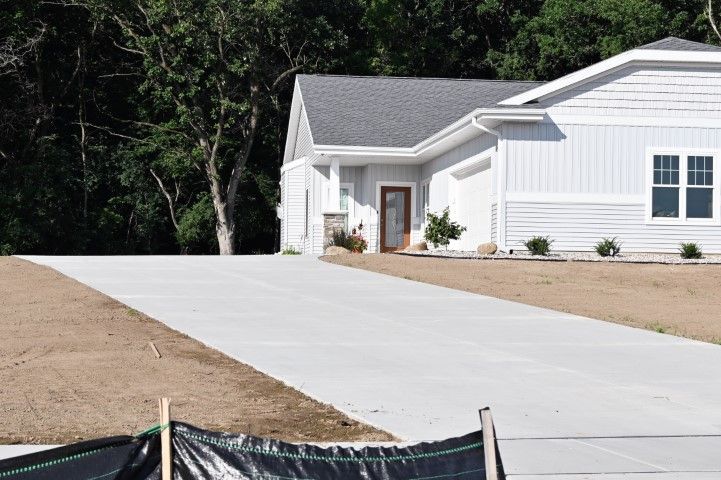
If you're a homeowner in Ramapo, Rockland County, or the Hudson Valley region considering a new driveway, you're probably weighing your options and asking yourself some important questions.